


Couple’s Therapy in Grand Rapids, MI
When You're Stuck in a Dance That's Destroying You Both
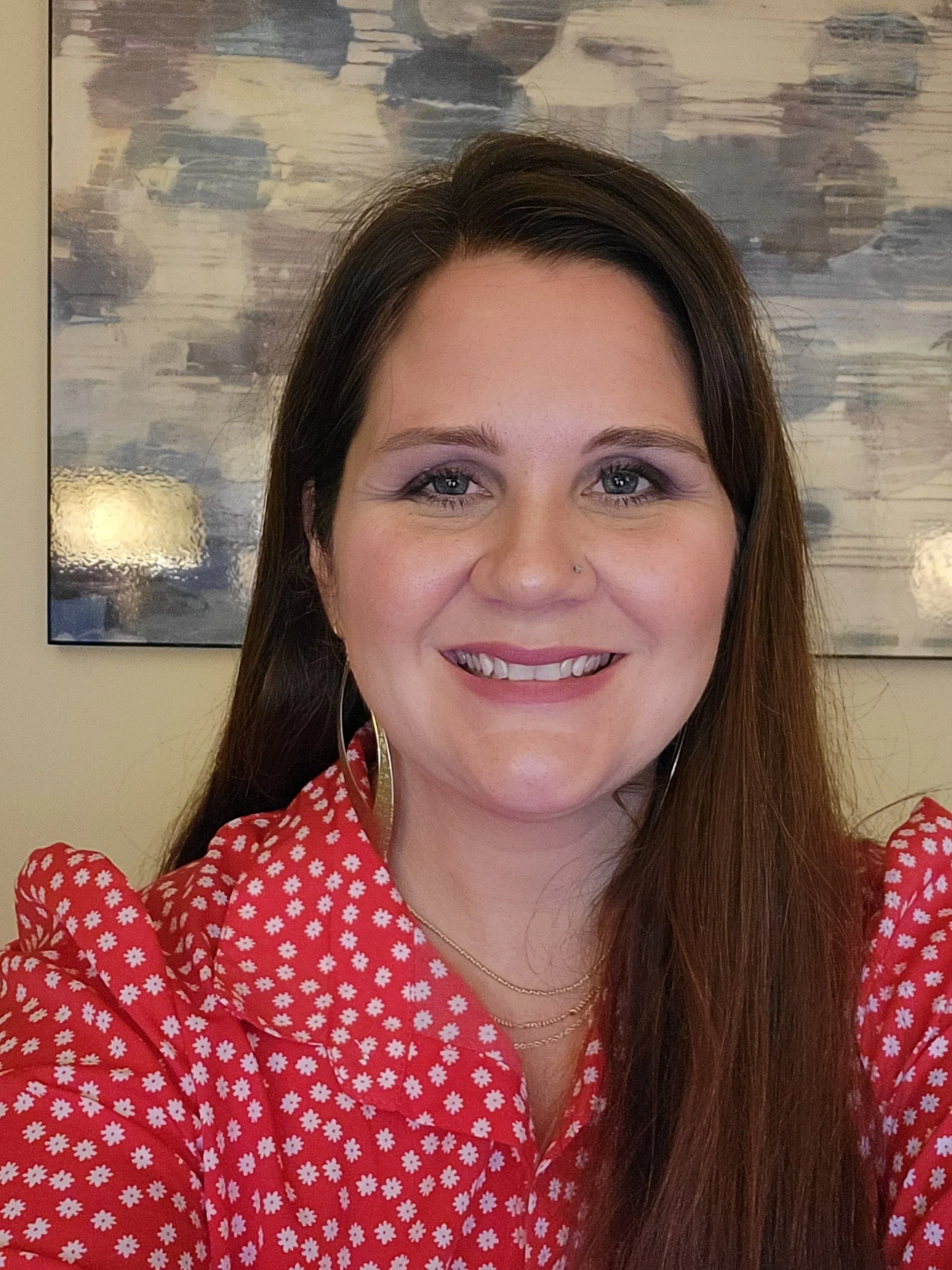
Rachel Duhon, Ph.D., LPC, CCTP, Certified Brainspotting Consultant
There's an unspoken choreography to your relationship, and it's slowly tearing you apart.
It's a dance of pursuit and distance, of demand and withdraw, of intensity and avoidance. One of you reaches, trying to bridge a gap that feels impossibly wide. The other retreats, seeking safety in silence or distraction. You both know the steps by heart. You've been dancing this way for years.
And you're both exhausted.
For one of you, the world feels like a constant state of pressure.
You are the vigilant one. The one who feels the shifts in emotional energy before anyone else. You track micro-expressions, you analyze tones of voice, you carry the constant, humming anxiety that if you let your guard down for even a second, everything will fall apart. You learned this role long ago. Your nervous system was trained to be a first responder, and now, you can't turn off the alarm. You see your partner's withdrawal not as a need for space, but as a confirmation of your deepest fear: that you are ultimately alone and must handle everything yourself.
For the other, the world feels like a constant state of threat.
You are the one who feels cornered. The one for whom emotional intensity feels like a physical attack. When your partner approaches with their needs, their fears, their urgency, you don't hear love—you hear pressure. You feel a tightening in your chest, an overwhelming urge to flee. Your own history taught you that the safest way to survive was to be small, to be quiet, to disappear. You don't mean to hurt your partner by withdrawing; you're trying to protect yourself from being engulfed, from losing yourself completely in their needs. The message your body hears is “I failed”.
You are both trapped by these brilliant survival strategies that once kept you safe.
The hypervigilant one needs connection to feel safe, but this intensity pushes the other away. The avoidant one needs space to feel safe, but their distance confirms the other's fears of abandonment.
You're caught in a painful, self-reinforcing loop. It's not a failure of love. It's a failure of your nervous systems to find a shared sense of safety.
This is a Developmental Impasse
Relationships are meant to be a journey of mutual evolution. But right now, you're locked in a developmental gridlock. One of you is pushing for growth, for emotional intimacy, for "more." The other is digging in, defending the status quo, clinging to the familiar because the unknown feels terrifying.
You're not just fighting about the dishes, parenting strategies, the bills or the lack of sex. You're fighting about the fundamental definition of safety.
For one of you, safety is connection, presence, and shared responsibility.
For the other, safety is autonomy, space, and emotional distance.
You cannot win this argument. You're both right. And you're both losing.
The Cost of the Dance
The pursuer feels a profound, bone-deep loneliness. They are starving for presence, for reciprocity, for a partner who will meet them in the messy middle of life. Their strength has become a burden, their capability is a lonely island.
The avoider feels a persistent, suffocating pressure. They are drowning in expectations, in the silent demands they feel emanating from their partner. Their need for space is pathologized, their desire for peace seen as a character flaw.
You are both grieving a connection you can't seem to reach.
You look at each other and see the source of your pain. The pursuer sees a selfish, abandoning partner. The avoider sees a needy, controlling one. You don't see the terrified, wounded children you both once were, who are still running the show from deep inside your nervous systems.
This is not a communication problem you can solve with date nights.
This is not a love problem you can solve with grand gestures.
This is a nervous system problem that requires a new kind of map.
The Couples Developmental Model: A New Way to Navigate
The Couples Developmental Model understands that you're not broken; you're stuck. It provides a framework for seeing your dynamic not as a series of hurts, but as a developmental pattern that can be understood and transformed.
In our work together, we don't take sides. We don't assign blame. We hold the complexity and the pain of both of your experiences with compassion.
We explore:
How your individual survival strategies created this painful relational dance
Why your nervous systems perceive safety and danger in such opposite ways
How to identify the moment the pattern begins and find a new way to respond
How to create a shared definition of safety that honors both of your needs
How to move from a parent-child dynamic to a true partnership of equals
This is for you if:
You feel trapped in a painful cycle of pursuit and distance
You love each other but are starting to resent each other
You've tried everything, and nothing creates lasting change
You're both exhausted from the constant emotional tug-of-war
You're ready to understand the deeper patterns driving your conflict
You're desperate for a connection that feels like a sanctuary, not a battleground
You don't have to choose between your relationship and yourself.
Healing doesn't mean the pursuer has to stop needing connection. It means learning that their safety doesn't have to depend solely on their partner.
Healing doesn't mean the avoidant has to stop needing space. It means learning that they can hold onto themselves even in the face of another's emotions.
Your relationship is asking you to evolve.
It's asking the pursuer to find their own inner anchor, to soothe their own alarm system. It's asking the avoidant to find their voice, to stay present even when it's uncomfortable. It's asking both of you to become the secure, regulated adults you needed then, so you can be the true partners you crave now.
It's time to stop the dance.
It's time to lay down the old roles. It's time to face each other, not as adversaries, but as two wounded souls who found each other and are ready, finally, to find a new way to be together.
I’d love to help you on this journey. Click here to schedule your free 10- minute phone consultation for complex trauma counseling in Grand Rapids. My other specialties include link, link, and link.
Frequently Asked Questions About Counseling in Grand Rapids
-
No. This isn't about learning to "I-statement" your way out of deep-seated patterns. We address the nervous system-level programming that drives your destructive dance - the survival strategies that keep you locked in pursuit-withdraw cycles regardless of how well you communicate
-
Together, we work with the dynamic as it exists. We don't need equal enthusiasm - we need underlying commitment. Even if one partner initially resists, understanding their protective strategies often creates the safety needed for them to engage more fully over time.
-
While traditional approaches often focus on conflict resolution or behavioral contracts, we identify and transform the developmental patterns driving your conflicts. We help you create a shared definition of safety that honors both your needs for connection and autonomy, rather than forcing one person to adapt to the other's style. Throughout this work, both of you increase your ability to tolerate anxiety and discomfort, so that you can reach common ground together.
-
Absolutely. Many couples come to after failed attempts at other modalities. Because are addressing the root nervous system patterns rather than surface symptoms, couples who've been stuck for years often find breakthroughs when previous approaches couldn't create lasting change
-
Not at all. This type of approach does not require you to become a different person. You both become more fully yourself, able to honor your and express your own needs while also having curiosity and acceptance of your partner’s needs, EVEN when those needs appear to be in conflict. You both develop the capacity to hold the tension between your different needs without it triggering your old survival alarms. This isn't about finding a compromise; it's about creating a shared safety so vast that both of your truths can finally fit inside
-
Rarely. Most insurance companies pay to treat mental health disorders and require services to be “medically necessary”. Medical necessity requires that covered services treat a disease, injury, condition, or illness. When I am seeing a couple, I am typically not treating a mental health disorder, but instead focusing on the goal of enhancing, saving, or restoring a relationship.
I strongly suggest that couples reach out to their insurance plans and/or benefits administrators to inquire whether “Z Codes” are covered by their plan. The Z Code used for marital/pre-marital therapy is Z63.0 – Problems in Relationship with Spouse or Partner. Do not ask if couples counseling is covered. Instead ask that they look up code Z63.0 and determine coverage for that. In many cases, member services will not have this information and you should ask to speak with someone in the claims department.
