


Counseling and Brainspotting Therapy for Complex Trauma in Grand Rapids, MI
When You’re the Strong One, but It’s Breaking You Inside
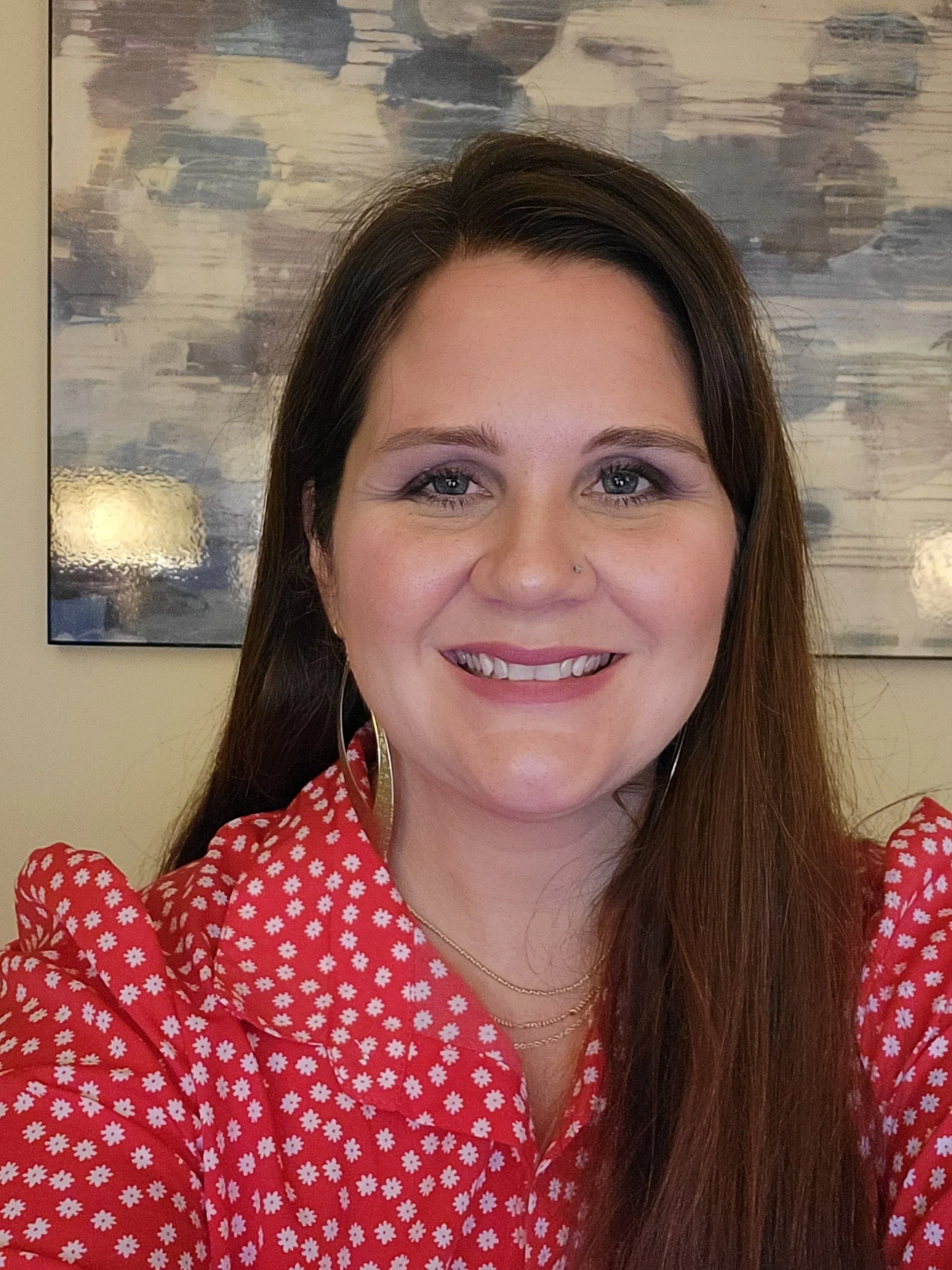
Rachel Duhon, Ph.D., LPC, CCTP, Certified Brainspotting Consultant
You woke up with that familiar heaviness.
Not the “I’m a little down” kind of feeling. It’s deeper than that. It’s the soul crushing space of aloneness, an aloneness that feels older than today. It sits in your chest before your feet even touch the floor.
And immediately, you shift into survival mode.
Refocus. Be positive. Get it together. You have to show up well for the people in your life.
Because you are the strong one.
You are the protector, the caretaker, the steady presence. You are the one who tracks everyone’s moods and keeps things from falling apart. You monitor tone shifts, facial expressions, the tension in the air. Your body reads a room before your mind catches up. It does not feel like a choice. It feels automatic.
You learned early on that paying attention to other people’s needs was how you stayed safe. Having it all together was how you belonged. Being low maintenance, capable, responsible, strong. That is how you survived hard things. So now, in your relationships, you try really hard to show up well.
You measure your words. You soften your tone. You time conversations carefully. You try to express your needs calmly.
And it still ends in a fight.
Then the spiral begins.
Am I in the wrong?
Am I selfish?
Am I the narcissist?
Am I just never satisfied?
You replay everything. You scan for your mistake. If you can find the flaw in you, you can fix it. If you can fix it, you can restore safety. That strategy worked before. It helped you survive.
Now, though, it is an endless exhausting loop.
You feel alone in your relationship. Not because you don’t care. Not because you want to leave. But because you are carrying the emotional weight of everything, and no one seems to notice.
Today something inside you broke a little bit.
You felt despair. You felt crushed. And your body felt tired in a way that sleep cannot fix.
That moment was not weakness.
It was your nervous system saying, “I cannot keep doing this alone.”
Complex Trauma and the Strong One Role
When you grew up in environments where love, safety, or belonging felt uncertain, your nervous system adapted.
You became hyper attuned. You tracked subtle cues. You learned to anticipate conflict before it exploded. You became responsible for the emotional temperature around you.
These adaptations are brilliant. They helped you survive.
But in adulthood, especially in intimate relationships, they can create painful patterns:
• Over functioning while feeling under supported
• Taking responsibility for everyone’s emotions
• Chronic self-doubt after conflict
• Feeling emotionally alone even when partnered
This is often the imprint of complex trauma. Not necessarily one big event, but repeated experiences where your needs were secondary, dismissed, or unsafe to express.
Your mind tries to reason through it. But trauma is not stored only in thoughts.
It is stored in your nervous system and in the land of no words in your brain.
Brainspotting Therapy for Complex Trauma
Brainspotting is a powerful trauma therapy that helps access and process experiences stored in the body and subcortical brain.
Instead of only talking through patterns, we pay attention to what happens inside you when you describe conflict or self-doubt.
The tightness in your chest.
The heaviness in your stomach.
The way your eyes naturally fix on a certain spot when you talk about feeling alone.
The urge to shut down.
The surge of shame.
These are not random. They are portals into stored emotional experiences.
In Brainspotting therapy, we use your visual field and body awareness to locate “brainspots” connected to unresolved trauma. From there, your body, in all its brilliance, begins to process what has been stuck, often without needing to analyze every detail.
This approach is especially helpful if:
· You feel stuck in the same relationship patterns despite insight
· You understand your history intellectually but still react intensely
· Self-criticism feels automatic and relentless
· You experience emotional overwhelm or shutdown during conflict
· You have the nagging sense that “something’s just not right” inside of you
· You frequently feel empty and alone
Brainspotting supports your nervous system in completing stress responses that were interrupted long ago. It allows your body to update old survival responses that no longer serve you.
Therapy for Those Who Feel Alone
I’m Dr. Rachel Duhon, a Licensed Professional Counselor in Grand Rapids, MI, and I specialize in Brainspotting therapy for complex trauma and relationship conflict.
I work with strong, capable adults who are exhausted from being the emotional anchor in their relationships. People who look confident on the outside but feel deeply alone and uncertain inside.
In our work together, we do not rush to blame you or your partner. We do not move into “fix it” mode. We slow down enough to honor what your nervous system learned about love, safety, and belonging.
We explore:
• How early survival strategies shaped your relationship patterns
• Why conflict triggers intense self-doubt
• Where your body holds unprocessed relational trauma
• How to rebuild trust in your own perception
You do not have to prove that you are “good enough” in this space. You do not have to be the steady one. You do not have to manage my reactions.
Therapy becomes a sanctuary where your system can finally exhale.
You Are Not Too Much. Your Nervous System Is Overworked.
If you are searching for therapy for complex trauma or Brainspotting therapy for relationship issues, you are likely tired of trying harder.
You may still love your partner. You may still want the relationship to work. But you cannot keep sacrificing yourself to keep the peace.
The part of you that broke a little bit was not failing.
It was signaling that your current coping strategies are no longer sustainable.
Healing does not mean becoming less caring or less responsible. It means no longer abandoning yourself to belong.
With the right support, your nervous system can learn that connection does not require self-erasure. Conflict does not mean danger. Expressing needs does not mean rejection.
You deserve a relationship where you are not the only strong one.
And you deserve therapy that goes deeper than advice, into the places your body has been holding alone for years.
I’d love to help you on this journey. Click here to schedule your free 10- minute phone consultation for complex trauma counseling in Grand Rapids. My other specialties include link, link, and link.
Frequently Asked Questions About Counseling in Grand Rapids
-
Brainspotting is a trauma focused therapy that uses eye position and body awareness to access stored emotional experiences. It is a client led approach that incorporates focused mindfulness and somatic awareness, based on the belief that your body knows what it needs to heal. Brainspotting helps the brain and nervous system process unresolved trauma that traditional talk therapy may not fully reach.
For more detailed information on how Brainspotting works, look here
-
Talk therapy focuses primarily on thoughts and insight. Brainspotting works directly with the body. We track body sensations, emotional activation, and visual focus points to support deeper processing. Because Brainspotting is focused on what’s happening inside of you (sensations, feelings, memories), words are often not necessary. This can be very helpful for people who struggle to put their internal experiences into words.
-
Yes. Many relationship triggers are rooted in earlier attachment wounds and complex trauma. Brainspotting can reduce reactivity, shame, and shutdown responses that escalate conflict.
-
Complex trauma often involves repeated relational stress rather than one single event. You do not need clear memories. We work with what shows up in your body in the present moment
-
No. Therapy is about clarity and healing, not forcing decisions. As your nervous system stabilizes, your choices become clearer and less fear driven.
-
Brainspotting is a naturally occurring phenomenon. All of us naturally Brainspot and once you understand what it is, you can’t unsee it! Brainspotting is designed to be paced and attuned to your nervous system. We move at a speed that feels manageable.
-
Healing is not linear. Some clients notice shifts within weeks, others choose longer term work. The pace depends on your goals and nervous system readiness. With complex trauma, there is deep relational wounding. Your body learned that relationships are unsafe. Building relational safety is vital for this work, and with complex trauma, that can take time to develop. This is not a setback. It is your body’s wisdom asking for the time it needs to build the safety required for true and lasting healing.
